
Amazon Buying GuidesTech & creative
Best computerized telescopes on Amazon
Eight GoTo telescopes compared by aperture, setup demands and the space they need at home.

Our writers are paid in part through commissions earned from purchases made through links in this article. If you find our content helpful, shopping through these links helps us keep the lights on.
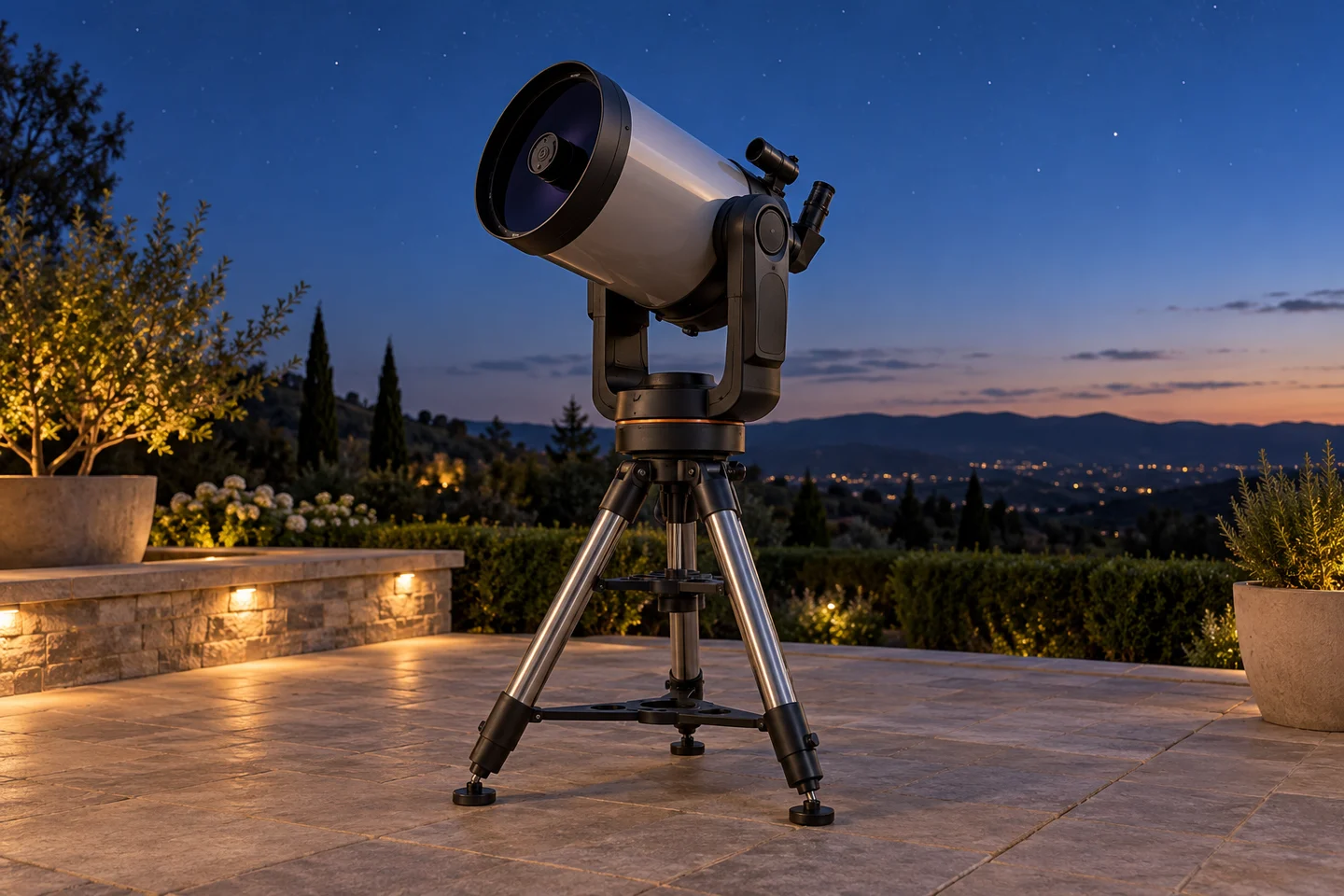
A computerized telescope can help you locate objects, but the best choice is still the instrument you can set up comfortably. We compare compact SCTs, larger systems and collapsible Dobsonians with realistic expectations for visual observing.
The shortlist, at a glance
- 01Celestron NexStar 8SEAperture with GoTo convenienceRead our assessment ↓View on Amazon
- 02Celestron NexStar Evolution 8Connected observing sessionsRead our assessment ↓View on Amazon
- 03Celestron NexStar Evolution 9.25More aperture for a fixed setupRead our assessment ↓View on Amazon
- 04Celestron NexStar 6SEA more manageable SCTRead our assessment ↓View on Amazon
- 05Sky-Watcher Flextube 250 SynScanLarge-aperture backyard observingRead our assessment ↓View on Amazon
- 06Sky-Watcher Flextube 200 GoToA compacting Dobsonian formatRead our assessment ↓View on Amazon
- 07Celestron NexStar 5SEA smaller computerized systemRead our assessment ↓View on Amazon
- 08Celestron NexStar 127SLTMoon and planet interestRead our assessment ↓View on Amazon
01 / Aperture with GoTo convenience
Celestron NexStar 8SE
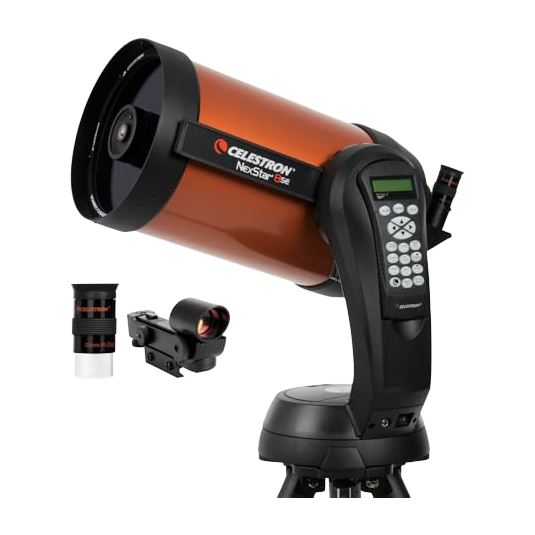
The 8SE combines an eight-inch optical tube with computerized pointing in a package that separates for transport. Its appeal is substantial aperture without a long reflector tube. Tracking helps keep an object in view for shared observing, but the mount still needs a correct initial alignment.
Power is an extra planning item: the standard specification calls for AA batteries or a suitable external supply, not an integrated rechargeable battery. Also leave budget for the eyepieces and dew control your observing conditions require. Computerized pointing does not make every catalog object visible from a light-polluted yard.
What stands out
- Eight-inch aperture in a compact optical tube
- Computerized pointing and tracking
- Breaks into transportable components
Know the trade-offs
- External power or batteries require planning
- Alignment and sky conditions still determine useful observing
Amazon prices and availability can change. Check the current offer before purchasing.
02 / Connected observing sessions
Celestron NexStar Evolution 8
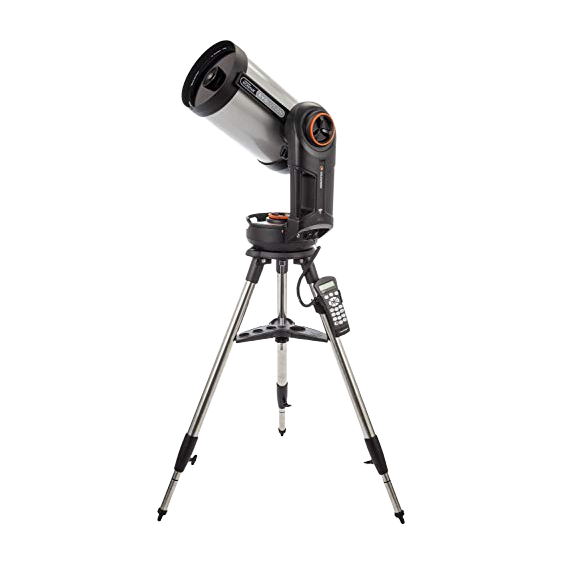
The Evolution 8's main upgrade is the observing setup around the optics: an integrated rechargeable battery, Wi-Fi control and manual clutches. These features reduce dependence on a separate power pack and make positioning more flexible. They can matter more in regular use than a longer object database.
The complete kit is over 40 pounds, so check how you will move its separate components outdoors. This is the standard Evolution 8, not the EdgeHD or StarSense package with a similar name. Choose the exact optical and alignment bundle you want rather than assuming all Evolution listings include the same upgrades.
What stands out
- Integrated rechargeable battery
- Wi-Fi control and manual clutches
- Carry handles and organized accessory storage
Know the trade-offs
- Substantial complete-kit weight
- Standard model is not the EdgeHD or StarSense bundle
Amazon prices and availability can change. Check the current offer before purchasing.
03 / More aperture for a fixed setup
Celestron NexStar Evolution 9.25
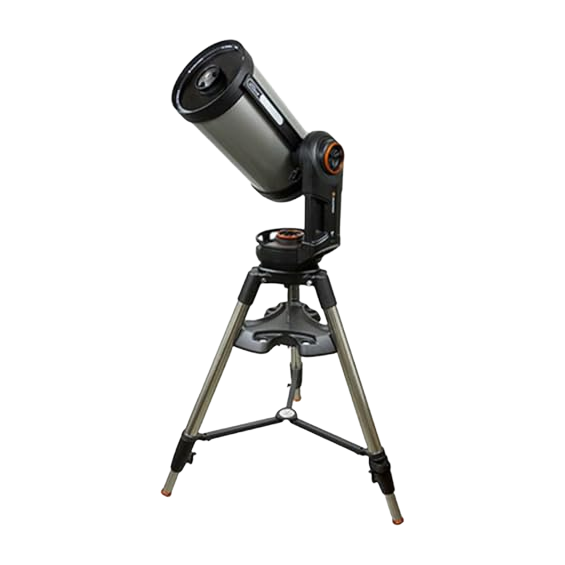
The Evolution 9.25 is for someone who values greater aperture enough to accept a significantly larger setup. It retains the integrated battery and connected control of the Evolution family, while the larger optical tube makes it a more purposeful observing instrument than a casual grab-and-go purchase.
Celestron lists the full kit above 62 pounds. Measure storage and transport space, and consider the weight of each component you must lift rather than only the total. The additional aperture is less useful if setup effort means the telescope stays indoors; compare the eight-inch model against your actual observing routine.
What stands out
- Larger 9.25-inch aperture
- Integrated battery and Wi-Fi
- Separate tube, mount and tripod components
Know the trade-offs
- Much heavier complete setup than Evolution 8
- Storage and setup effort can discourage frequent use
Amazon prices and availability can change. Check the current offer before purchasing.
04 / A more manageable SCT
Celestron NexStar 6SE
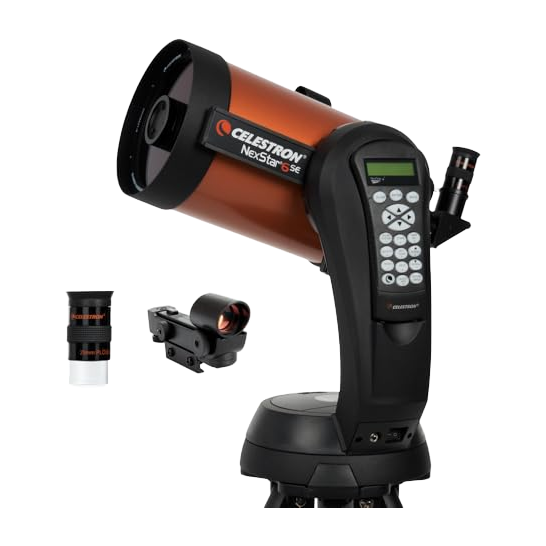
The 6SE offers the same general computerized observing approach as the 8SE with a lighter optical tube. It is a useful compromise when carrying the equipment is a bigger obstacle than finding storage space. The six-inch aperture and long focal length suit a deliberate lunar, planetary and general observing setup.
The complete kit is still about 28 pounds, and power is not built in. A suitable battery or adapter, observing chair and additional eyepiece choices can change the total cost. Compare it with the 8SE on what you can comfortably deploy, not an expectation that the larger database or magnification figure guarantees a better view.
What stands out
- Lighter tube than the eight-inch SE
- Computerized tracking
- Compact six-inch optical design
Know the trade-offs
- Power source needs separate planning
- Less aperture than the 8SE for faint targets
Amazon prices and availability can change. Check the current offer before purchasing.
05 / Large-aperture backyard observing
Sky-Watcher Flextube 250 SynScan
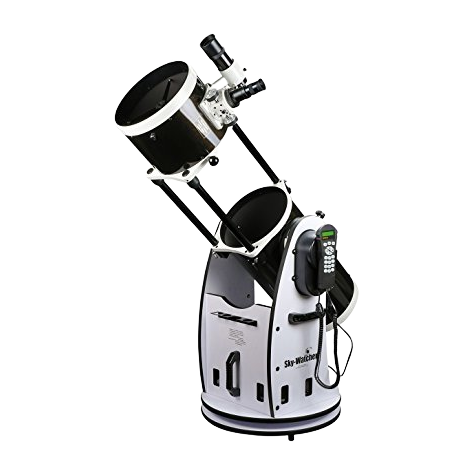
The Flextube 250P combines a ten-inch reflector with computerized pointing and tracking. Its collapsing tube reduces storage length, while dual encoders allow manual movement without losing the mount's alignment. It is attractive when visual observing and aperture are more important than a small tripod-mounted package.
Collapsing the tube does not shrink the diameter or the rocker-box base. Check both pieces against your storage and vehicle, and allow time to learn alignment and optical collimation. The supplied single-speed focuser and accessories may be enough initially, but specialist eyepieces or a light shroud can become later purchases.
What stands out
- Large ten-inch aperture
- Manual movement can preserve alignment
- Collapsible tube and flexible eyepiece fitting
Know the trade-offs
- Base and tube remain bulky despite collapsing
- Requires learning alignment and collimation
Amazon prices and availability can change. Check the current offer before purchasing.
06 / A compacting Dobsonian format
Sky-Watcher Flextube 200 GoTo
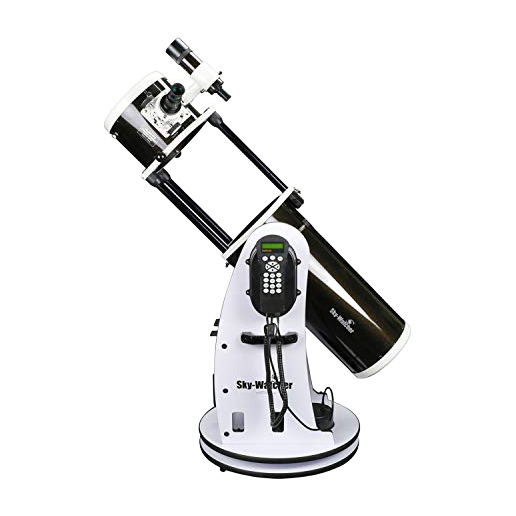
The 200P SynScan retains the collapsible tube and manual-or-computerized control of the larger Flextube while using an eight-inch mirror. It is worth considering when the ten-inch model's diameter and handling requirements feel excessive. The two-inch focuser also leaves useful scope for different eyepieces.
It remains a floor-standing Dobsonian with a separate base, not a compact tabletop telescope. Confirm the current controller and accessory bundle, since editions change. If you are happy finding and following objects manually, compare a nonmotorized Dobsonian before paying for electronics and their power requirements.
What stands out
- Eight-inch aperture with GoTo tracking
- Manual movement retains alignment
- Collapsible tube and two-inch focuser
Know the trade-offs
- Still needs substantial floor and storage space
- Electronics add cost and power requirements
Amazon prices and availability can change. Check the current offer before purchasing.
07 / A smaller computerized system
Celestron NexStar 5SE
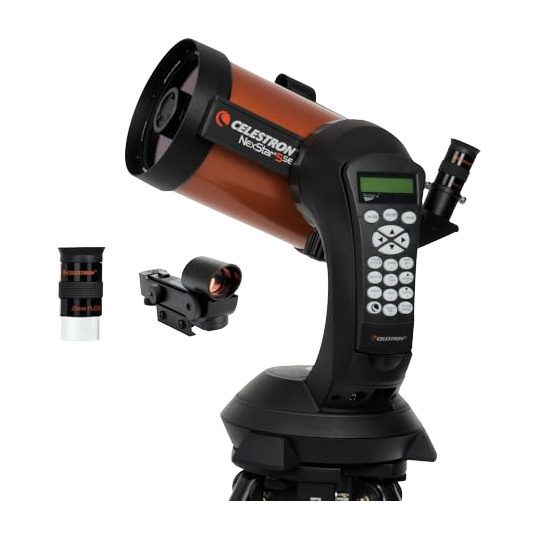
The 5SE is the lighter SE option for observers who want computerized pointing without the larger models' handling demands. Its compact Schmidt-Cassegrain tube and included wedge offer flexibility for learning different setup methods. The complete-kit weight is materially lower than the 8SE's.
The five-inch aperture gives up light collection compared with the larger options. A built-in wedge also does not remove the learning curve or accessory needs of imaging. Check your intended camera setup carefully, and remember that power still comes from batteries or a suitable external supply rather than an integrated rechargeable pack.
What stands out
- Lighter SE configuration
- Computerized pointing and tracking
- Built-in wedge for additional setup options
Know the trade-offs
- Smaller aperture than six- and eight-inch models
- Imaging and power still require additional planning
Amazon prices and availability can change. Check the current offer before purchasing.
08 / Moon and planet interest
Celestron NexStar 127SLT
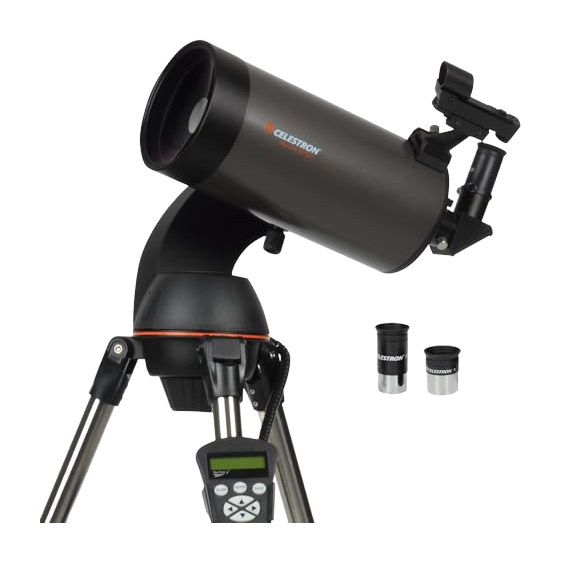
The 127SLT pairs a compact Maksutov optical tube with computerized tracking and two supplied eyepieces. Its long focal length is useful for smaller targets such as the Moon and planets. It is a focused alternative to a large reflector when storage and a compact tube matter.
The same optical design is less suited to sweeping very wide star fields. Celestron also notes that a Maksutov's thicker corrector takes longer to reach outdoor temperature than a similarly sized Schmidt-Cassegrain. Plan acclimation and a power source before expecting an immediate, steady high-magnification session.
What stands out
- Compact long-focal-length optical tube
- Two eyepieces supplied
- Computerized pointing and tracking
Know the trade-offs
- Narrower-view emphasis is less suitable for wide fields
- Needs temperature acclimation and separately planned power
Amazon prices and availability can change. Check the current offer before purchasing.
Compare the essentials
| Model | Best fit | Key specification | Important trade-off | Amazon price (USD) |
|---|---|---|---|---|
| Celestron NexStar 8SE | Aperture with GoTo convenience | 8-inch aperture | Substantial aperture in a compact tube, but include power, alignment time and location-appropriate accessories. | View on Amazon |
| Celestron NexStar Evolution 8 | Connected observing sessions | 8-inch aperture | More convenient power and controls than the SE, but confirm the optical bundle and plan component transport. | View on Amazon |
| Celestron NexStar Evolution 9.25 | More aperture for a fixed setup | 9.25-inch aperture | More aperture at a substantial handling cost; choose it only if transport and regular setup are realistic. | View on Amazon |
| Celestron NexStar 6SE | A more manageable SCT | 6-inch aperture | A more manageable SE setup; balance aperture against carrying effort and include power in the budget. | View on Amazon |
| Sky-Watcher Flextube 250 SynScan | Large-aperture backyard observing | 10-inch aperture | Strong visual-observing potential, but the collapsing tube does not remove the bulky base or setup skills. | View on Amazon |
| Sky-Watcher Flextube 200 GoTo | A compacting Dobsonian format | 8-inch aperture | A smaller GoTo Flextube, but compare a manual Dobsonian if electronic pointing is not important to you. | View on Amazon |
| Celestron NexStar 5SE | A smaller computerized system | 5-inch aperture | Easier to carry, but choose it for manageable observing rather than assuming the wedge makes imaging effortless. | View on Amazon |
| Celestron NexStar 127SLT | Moon and planet interest | 127mm aperture | Compact and suited to smaller targets, but allow cooling time and do not expect a wide-field viewing specialist. | View on Amazon |
About Amazon prices
Prices are in US dollars for the linked model. Used offers are marked separately. Taxes, delivery and any checkout-only coupons may affect the final total.
Product prices and availability are accurate as of the date/time indicated and are subject to change. Any price and availability information displayed on Amazon.com at the time of purchase will apply to the purchase of this product.
Certain content that appears on this site comes from Amazon. This content is provided 'as is' and is subject to change or removal at any time.
How we choose and rate
We review manufacturer specifications, product documentation and the exact model offered by the retailer. Our assessment weighs documented capabilities, day-to-day convenience, ownership demands and suitability for the use case stated above. A higher score does not mean a product is best for every household.
Each criterion is rated out of five, with equal weight; the average is rounded to one decimal place. These are editorial judgments, not Amazon customer ratings, measured performance scores or claims of hands-on testing. We do not change a score to reflect the commission a purchase may generate.
See the scoring breakdown
| Product | Capabilities | Convenience | Ownership | Use-case fit |
|---|---|---|---|---|
| Celestron NexStar 8SE | 4.5/5 | 4.1/5 | 3.9/5 | 4.6/5 |
| Celestron NexStar Evolution 8 | 4.5/5 | 4.5/5 | 4/5 | 4.7/5 |
| Celestron NexStar Evolution 9.25 | 4.7/5 | 3.7/5 | 3.6/5 | 4.6/5 |
| Celestron NexStar 6SE | 4.1/5 | 4.4/5 | 4.2/5 | 4.6/5 |
| Sky-Watcher Flextube 250 SynScan | 4.7/5 | 3.6/5 | 3.5/5 | 4.6/5 |
| Sky-Watcher Flextube 200 GoTo | 4.3/5 | 3.9/5 | 3.8/5 | 4.4/5 |
| Celestron NexStar 5SE | 3.8/5 | 4.5/5 | 4.3/5 | 4.5/5 |
| Celestron NexStar 127SLT | 3.7/5 | 4.2/5 | 4.2/5 | 4.4/5 |
Sources and model checks
- Celestron NexStar 8SE: product listing and specifications
- Celestron NexStar Evolution 8: product listing and specifications
- Celestron NexStar Evolution 9.25: product listing and specifications
- Celestron NexStar 6SE: product listing and specifications
- Sky-Watcher Flextube 250 SynScan: product listing and specifications
- Sky-Watcher Flextube 200 GoTo: product listing and specifications
- Celestron NexStar 5SE: product listing and specifications
- Celestron NexStar 127SLT: product listing and specifications
Specifications and model links checked October 25, 2026. Manufacturer claims use their own test conditions; figures are not directly comparable laboratory measurements.
The opening lifestyle image is an illustrative category scene. Product photographs throughout the shortlist and reviews are supplied by Amazon for the linked models.
Product documentation
- Celestron NexStar 8SE: Celestron 8SE mount, power and included equipment
- Celestron NexStar Evolution 8: Celestron Evolution 8 battery, controls and kit weight
- Celestron NexStar Evolution 9.25: Celestron Evolution 9.25 configuration and weight
- Celestron NexStar 6SE: Celestron 6SE aperture, component weights and power
- Sky-Watcher Flextube 250 SynScan: Sky-Watcher 250P SynScan design and setup features
- Sky-Watcher Flextube 200 GoTo: Sky-Watcher 200P SynScan controls and optical configuration
- Celestron NexStar 5SE: Celestron 5SE wedge, weight and power specifications
- Celestron NexStar 127SLT: Celestron 127SLT optics, cooling and power guidance
Documentation checked October 25, 2026. Practical buying implications are editorial judgments based on the cited features and limitations, not claims of hands-on testing or measured reliability. Specifications can vary by region, generation and bundle.
Your questions, answered
Does GoTo mean no alignment is needed?
No. Setup and alignment requirements depend on the system. Automated object location is not a substitute for following the manual.
Can I point these telescopes at the Sun?
Never view the Sun without a properly designed and securely fitted solar-filter system approved for the instrument. Ordinary eyepieces and sunglasses do not provide protection.